
Ukraine Travel Checklist 2026: What Foreigners Should Prepare Before Crossing the Border
Here is the first thing to know: Ukraine's airspace has been closed to civilian flights since 2022. Travelers currently plan an overland route, often through Poland, Hungary, Slovakia, Romania, or Moldova, and should verify current transport and border guidance before departure. That fact reshapes the whole trip — and it is only the start.
Foreign visitors continue to cross Ukraine's land borders, but conditions and individual experiences vary. Under martial law, travelers should expect document and security checks, verify current insurance requirements for their nationality and visa status, and prepare for air alerts, curfews, and possible disruption.
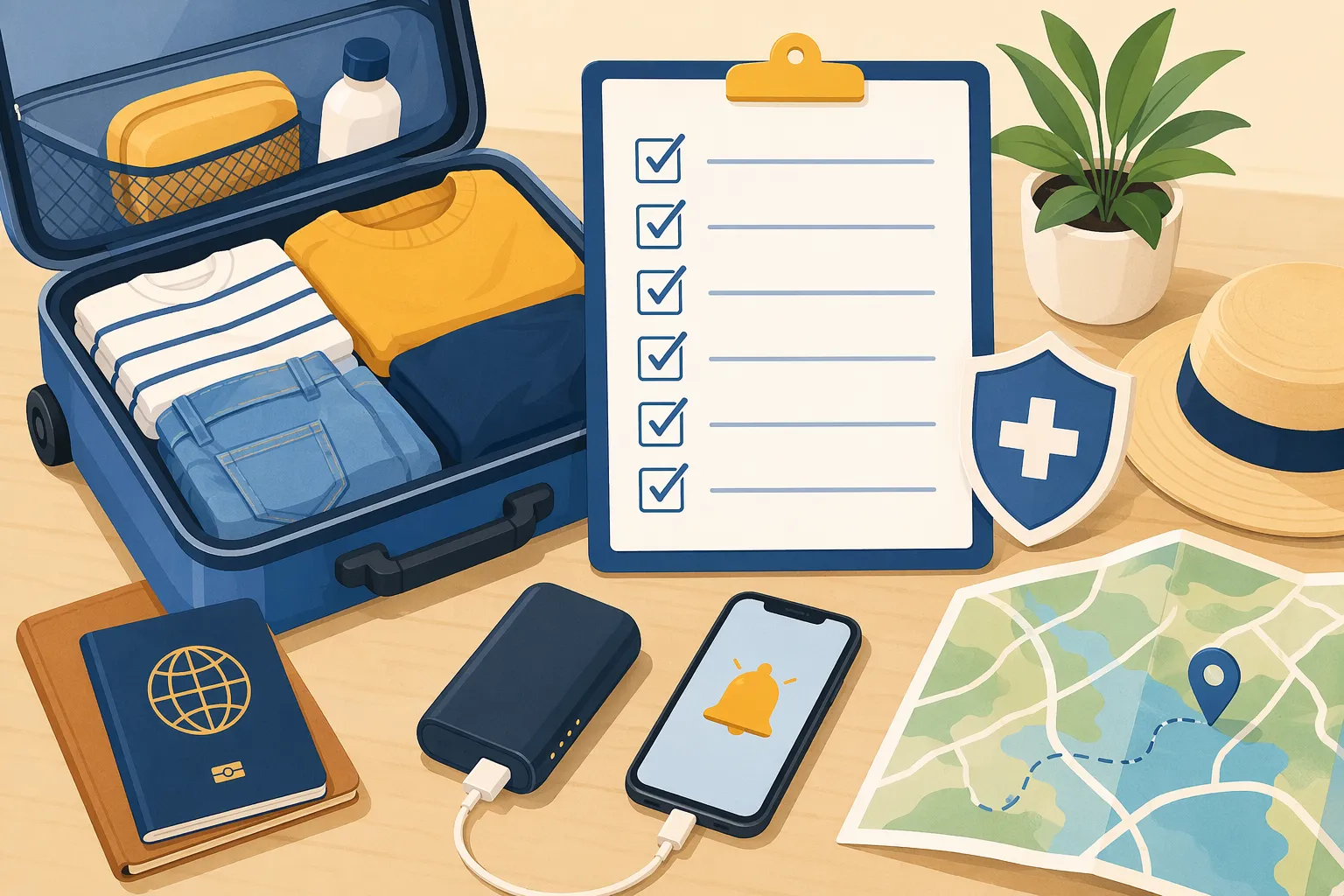
This guide is a master pre-departure checklist for EU, UK, and US citizens — from first-time tourists to aid workers and journalists. It covers documents, money, insurance, connectivity, safety, and packing, and ends with one consolidated checklist.
Quick Answer
💡 Entry requirements and checks vary by nationality, visa status, purpose of travel, and current rules. EU, UK, and US citizens may generally qualify for visa-free visits of up to 90 days within a 180-day period, but should verify current official Ukrainian guidance before departure. Carry a valid passport and medical cover, and be ready to explain your trip and present supporting documents requested under the rules that apply to you.
Key Takeaways
- Civilian flights do not currently operate into Ukraine; plan an overland route and verify current transport and border guidance.
- EU, UK, and US citizens may generally qualify for visa-free visits of up to 90 days in any 180-day period; eligibility and checks depend on nationality, purpose, visa status, and current rules.
- Insurance requirements vary by nationality, visa status, and current rules; carry valid medical cover for the whole stay.
- EHIC/GHIC arrangements do not apply; whether a standard policy covers Ukraine or war-related events depends on its wording, limits, exclusions, eligibility, and travel-advice conditions.
- Keep valid identification readily available, follow current curfew rules, and do not photograph military positions.
- Cards are widely accepted in cities, but keep cash for small towns, outages, or connectivity problems.
Entry Requirements: What Border Officers Actually Check
Start with the rules — everything else on the checklist flows from them, and a full breakdown is available in our guide to Ukraine entry requirements in 2026.
Citizens of the European Union, the United Kingdom, and the United States may generally qualify for visa-free visits of up to 90 days within any 180-day period. Eligibility, permitted activities, documents, and checks vary by nationality, visa status, purpose, and current rules. Verify official Ukrainian guidance; where the 90/180 rule applies, the window is rolling rather than calendar-based.
Visa-free travel does not remove border checks. Depending on the rules and your circumstances, officers of the State Border Guard Service may request:
- A valid passport. It should comfortably outlast your planned stay; a passport expiring mid-trip invites questions.
- Medical insurance covering the entire stay. Requirements can vary by nationality, visa status, and current rules. Verify official guidance and ensure the policy dates cover the trip.
- Proof of sufficient funds in a form accepted under the current rules, such as relevant financial evidence.
- Accommodation details and travel purpose. A hotel booking, an invitation letter, or a relative's address, plus a coherent answer about why you are visiting and when you plan to leave.
- A return or onward ticket, or at least a credible exit plan.
Documents to Prepare: Print, Photograph, Duplicate
Border checks, internal checkpoints, and hotel registration all involve paperwork, so redundancy is your friend — if your situation is unusual, the detailed guide to documents required to enter Ukraine covers edge cases. Before departure, assemble:
- Passport (check the expiry date now, not at the border)
- Insurance policy — printed copy plus the PDF saved offline on your phone
- Accommodation confirmations for at least your first nights
- Return or onward tickets
- Proof of funds, such as a recent statement or other evidence accepted under current rules
- Any invitation letter, press accreditation, or volunteer organization letter relevant to your trip
- Emergency contacts: your embassy in Kyiv or consulate in Lviv, your insurer's assistance line, and family back home
Photograph every document and store copies in the cloud and offline on your device. Power cuts and patchy mobile coverage are still a reality in parts of the country.
Money in Ukraine: Hryvnia, Cards, and Why You Still Need Cash
Ukraine's currency is the hryvnia (UAH). Contactless cards and mobile payments are widely available in larger cities, but acceptance and connectivity can vary. Plan in layers:
- Notify your bank before departure so Ukrainian transactions are not flagged as fraud.
- Carry some euros or dollars in cash to exchange on arrival — rates inside Ukraine are generally fair, but avoid exchanging at the border itself.
- Keep a hryvnia reserve for small towns, market stalls, some intercity buses, and any period when power (and card terminals) goes down.
- Withdraw from ATMs of major banks such as PrivatBank, Oschadbank, or Raiffeisen rather than standalone machines.
Costs vary by destination and travel style. Keep room in your budget for delays, route changes, medical needs, or other unplanned events.
Travel Insurance for Ukraine: What to Check
Medical cover belongs near the top of a Ukraine checklist. Requirements and checks vary by nationality, visa status, purpose, and current rules. Whether an ordinary policy covers Ukraine, travel against official advice, or war-related events depends on its wording. EHIC and GHIC arrangements do not apply because Ukraine is outside the relevant reciprocal systems. Verify official Ukrainian guidance and obtain written confirmation of cover from the insurer.
Choose a policy that explicitly lists Ukraine and matches your dates and activities. Insurance Ukraine offers a EUROINS product issued as a digital PDF after successful purchase. Its wording describes eligible treatment for certain war-related injuries, subject to insured limits, exclusions, eligibility, assistance procedures, and the circumstances of the covered event; no claim outcome is guaranteed.
When comparing any Ukraine-specific policy, check five things:
- Insured amount. The featured product offers Basic at 100,000 UAH (roughly €2,000) and Advanced at €30,000. These are maximum insured amounts, not guarantees that every medical or evacuation cost will be paid; check benefit limits and authorization rules.
- War-risk clause. Read it carefully. Coverage of armed-conflict events is policy-dependent. Confirm covered events, limits, exclusions, eligibility, required approvals, and territorial, activity, and travel-advice conditions.
- Duration match. Carry cover valid for every day of your stay. The featured product permits terms from 3 to 180 days, subject to its eligibility and policy wording.
- Eligibility. Age limits are common — many products, including the one above, cover travelers under 70.
- Cost and terms. Prices start from about €3.56 for a three-day Basic policy or €5.75 for Advanced, adding roughly €1.08 or €1.73 respectively per extra day, paid online and charged in hryvnia. An optional radiation-risk add-on costs roughly 3.5 times the base price and remains subject to its wording, limits, exclusions, eligibility, and the covered event.
Buy the policy before you travel, print it, and save the PDF offline. To compare tiers and price a specific trip length, the dedicated travel insurance Ukraine page explains each level and calculates the exact premium for your dates.
👉 Get covered today
Buy InsuranceStaying Connected: SIM Cards, Alert Apps, and Offline Backups
Mobile service is widely available, but coverage and power can be disrupted. Staying reachable during an air alert or outage takes advance planning.
- Consider a local SIM or eSIM from Kyivstar, Vodafone Ukraine, or lifecell. Compare current prepaid offers and coverage for your route; a local number can help with taxis, deliveries, and two-factor codes.
- Install an air raid alert app (the official "Air Alert" app is available in English) and enable notifications for the regions you will visit.
- Download offline maps of your route in Google Maps or Organic Maps.
- Save key numbers: 112 is the general emergency line; keep your insurer's 24/7 assistance number on paper as well as in your phone.
- Carry a power bank. Outages during infrastructure attacks can last hours; a charged power bank keeps your documents, tickets, and alert app alive.
Safety Rules for Foreigners: Honest Preparation, Not Alarm
Risk in Ukraine is real and varies by region. Many services continue in western cities and Kyiv, but missile and drone attacks, alerts, outages, and transport disruption remain possible anywhere. Areas near active hostilities carry extreme risk and may be prohibited. Prepare accordingly:
- Check your government's travel advisory before booking, and re-check the week you leave — conditions change.
- Learn the alert routine. When sirens sound or the app alerts, locate the nearest shelter; metro stations in Kyiv and Kharkiv double as deep shelters, and hotels will direct you to theirs. Do not ignore alerts because locals seem calm.
- Check and follow current curfew rules for every region you visit; hours and permitted exceptions vary by oblast and can change.
- Keep valid identification readily available and follow instructions at internal checkpoints. Check official guidance on when original documents must be carried.
- Do not photograph military positions, checkpoints, air-defense activity, or the aftermath of strikes. This is taken extremely seriously.
- Register with your embassy if your country offers a traveler registration program, such as the US STEP program.
How to Get to Ukraine: Border Routes That Actually Work
With civilian flights unavailable, your overland route deserves as much planning as your packing.
- From Poland — direct trains may connect Warsaw, Kraków, and Przemyśl with Lviv and Kyiv; verify current timetables and border procedures. Road options include Medyka–Shehyni, Korczowa–Krakovets, and Dorohusk–Yahodyn; confirm that your chosen crossing is open to your transport type.
- From Hungary — Záhony–Chop, connecting toward Uzhhorod and Mukachevo.
- From Slovakia — Vyšné Nemecké–Uzhhorod, a quieter option into Zakarpattia.
- From Romania — Siret–Porubne, the natural route to Chernivtsi and on toward Kyiv or Odesa.
- From Moldova — Palanca and other crossings serving Odesa, often reached via Chișinău after flying into Moldova.
Road and pedestrian crossing times vary with traffic and border procedures, so build buffer time into onward connections. Check international train availability early via official Ukrzaliznytsia channels.
What to Pack for Ukraine: Items That Earn Their Place
Ukraine's cities have pharmacies, supermarkets, and outdoor shops, so pack for resilience rather than self-sufficiency:
- Power bank (10,000 mAh or larger) and a small flashlight or headlamp
- Plug adapter (Ukraine uses European type C/F sockets, 230V)
- Basic first-aid kit and prescription medication in original packaging, with a copy of the prescription
- Seasonal layers — hot summers, genuinely cold winters
- Comfortable walking shoes for cobblestones and shelter stairs
- Paper copies of passport, insurance policy, and bookings
- Earplugs and a sleep mask for night trains
- A modest cash reserve split between bag and person
The Master Pre-Departure Checklist
Run through this list the week before you leave, then again the night before:
Documents
- Passport valid well beyond your stay
- Medical insurance policy covering every day of the trip (printed + offline PDF)
- Accommodation confirmations and onward ticket
- Proof of funds and any invitation or accreditation letters
- Copies of everything, stored offline and in the cloud
Money
- Bank notified of travel
- Euros or dollars in cash to exchange
- Plan for ATM withdrawals at major banks
Insurance
- Ukraine is within the policy territory; any war/radiation benefits are confirmed in writing and understood as subject to policy wording, limits, exclusions, eligibility, required approvals, and the covered event
- Coverage tier matches your trip (basic ≈ €2,000 vs. advanced €30,000)
- Insurer's assistance number saved and written down
Connectivity
- Local SIM/eSIM plan chosen
- Air Alert app installed, offline maps downloaded
- Power bank charged
Safety
- Government advisory reviewed; embassy registration done
- Curfew hours checked for each destination
- Shelter locations noted for your accommodation
Getting there
- Border crossing or train route chosen and tickets booked
- Buffer time built in for passport control
Related insurance and country guides
Use these related pages to compare policy types, country-specific requirements, and current entry rules for Ukraine.
More Ukraine travel insurance guides
Continue with practical guides that update automatically as new blog articles are published.